
Bedtime routines
Screen-Free Bedtime Routine Ideas for Kids Ages 3–10
A screen-free bedtime routine does not need to be long, perfect, or identical every night. Try these flexible ideas to help children ages 3–10 move from busy evenings toward bedtime.
Screen-free bedtime routines can be simple
Evenings can fill up quickly with dinner, cleanup, homework, baths, sibling disagreements, and last-minute requests. A screen-free bedtime routine is not a flawless schedule or a way to make a child sleepy on command. It is a few repeatable signals that help the household move from daytime activity toward nighttime.
For many families, a simple routine is easier to repeat than a complex one. It can be as short as pajamas, teeth, one quiet activity, and a familiar goodnight.
If your family uses devices in the evening, choose a clear household device-off point. A digital Istorya story belongs before that point; it is not screen-free. Istorya is currently in beta and creates illustrated personalized stories with the child as the hero, centered on values and everyday situations. After devices are put away, continue with offline bedtime steps.
Here are eight flexible ideas for children ages 3-10.
1. Use a short "closing time" cue
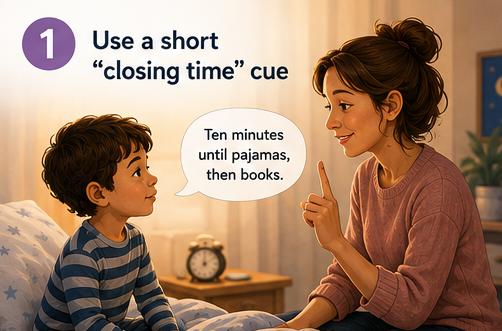
Choose a calm, specific phrase that signals the evening is winding down: "Ten minutes until pajamas" or "Next is teeth, then books." Naming the next step is often clearer than a broad instruction to get ready for bed.
Age adaptations:
- Ages 3-5: Offer two simple choices, such as blue or striped pajamas.
- Ages 6-10: Let your child follow a short picture or written bedtime checklist.
2. Make a landing spot for tomorrow
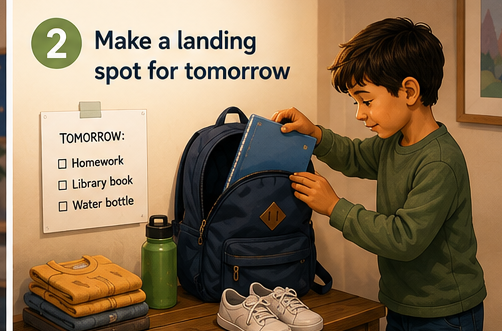
Small practical worries can appear at bedtime: missing shoes, library books, or questions about the next school day. Spend a few minutes setting out clothes, placing needed items by the door, or checking that a backpack is ready. Keep the task brief so it does not become a late-night project.
Age adaptations:
- Ages 3-5: Choose tomorrow's clothes together and place them in one visible spot.
- Ages 6-10: Have your child gather one or two school items and make a short tomorrow list if helpful.
3. Use wash-up as a reset
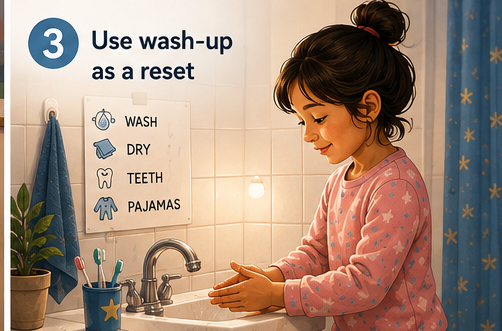
A bath is not necessary every night, but washing hands and face, brushing teeth, applying lotion, or combing hair can mark the shift to quieter time. The goal is not an elaborate grooming routine. It is a predictable sequence that your child recognizes.
Age adaptations:
- Ages 3-5: Narrate the steps: "Wash, dry, teeth, pajamas."
- Ages 6-10: Encourage independence with familiar tasks while staying available for questions or a quick check.
4. Do one small tidy
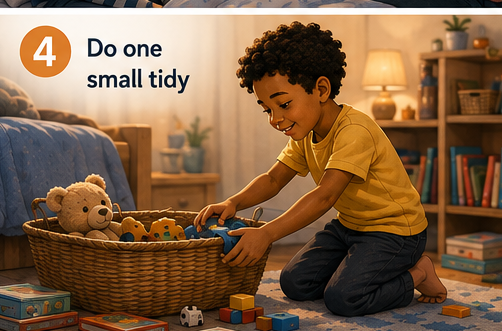
Bedrooms do not need to be spotless before bed. A one-minute reset might mean putting three toys in a basket, returning books to a shelf, or placing dirty clothes in the hamper. A small task can reduce arguments about mess while helping children practice caring for their belongings.
Age adaptations:
- Ages 3-5: Make it a simple game: "Can you find three blocks for the bin?"
- Ages 6-10: Let your child choose one quick reset that will make tomorrow morning easier.
5. Read, look at pictures, or tell a familiar story

Shared reading and storytelling can create a quiet connection point. Keep a small bedtime book basket so choosing does not become overwhelming. Rereading favorites is fine; many families enjoy returning to familiar stories.
You might also tell a simple family memory or invent an adventure about a stuffed animal. If you use a digital Istorya story, explore it before the household device-off point. Then continue offline with a question such as, "What choice felt kind?" or "What would you do in that situation?"
Age adaptations:
- Ages 3-5: Choose short picture books, rhymes, or a repeated familiar tale.
- Ages 6-10: Try a chapter book, comic-style book, or shared reading with alternating pages or dialogue.
6. Add a brief feelings check-in
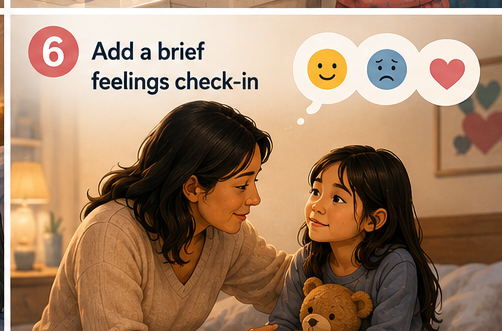
Bedtime can make room for thoughts that did not surface during a busy day. A check-in does not need to become a long conversation. Ask one question, listen, and avoid feeling pressure to solve every concern immediately.
Try: "What was one good part of today?" "Was anything tricky?" or "Would you like a hug, help, or for me to listen?"
Age adaptations:
- Ages 3-5: Use simple feeling words, including happy, sad, mad, worried, excited, or tired.
- Ages 6-10: Ask for a high, a low, and something they are looking forward to; offer the option to talk more tomorrow.
7. Offer a quiet-hands activity
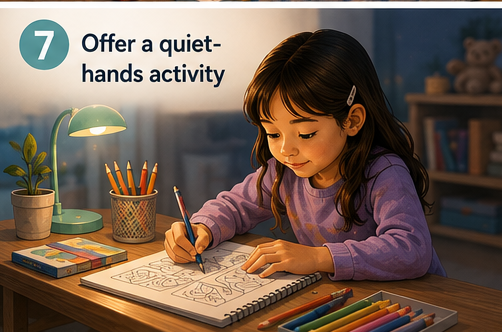
Some children need a short bridge between active evening energy and lying down. Choose contained, easy-to-put-away activities such as coloring, a small puzzle, drawing, lacing cards, or looking through books. Skip projects likely to create more energy, clutter, or negotiation.
Age adaptations:
- Ages 3-5: Offer stickers, coloring, or a few large puzzle pieces.
- Ages 6-10: Keep a notebook for doodles, comics, short poems, or a few sentences about the day.
8. End with the same goodnight ritual

A goodnight ritual can be very small: a hug, a hand squeeze, tucking in a stuffed animal, turning on a night-light, or naming tomorrow's first step. Repetition gives bedtime a clear ending.
If new requests come up after the ritual begins, respond matter-of-factly when possible and return to the usual close.
Age adaptations:
- Ages 3-5: Use the same short phrase each night, such as "You are loved, and it is time to rest."
- Ages 6-10: Let your child choose between two connection rituals, such as a hug or a quiet check-in before you leave.
Keep the routine flexible, not fragile
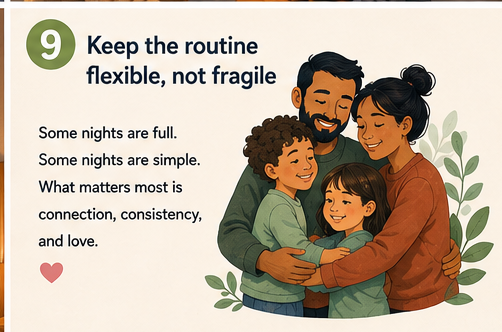
A workable routine can survive late dinners, visitors, travel, school events, and difficult days. On busy nights, use a minimum version: toilet, teeth, pajamas, one brief connection moment, and goodnight. Return to the usual pattern when you can.
It can also help to separate required steps from choices. Toothbrushing may be nonnegotiable, while choosing between two books is optional. Start with two or three ideas, keep what feels practical, and adjust as your child grows.
Sources and further reading
- American Academy of Pediatrics, "Bedtime Trouble"
https://www.healthychildren.org/English/healthy-living/sleep/Pages/bedtime-trouble.aspx
- American Academy of Pediatrics, "Healthy Sleep Habits"
- American Academy of Pediatrics, "Books to Teach Kids About Feelings and Resilience"
- PBS Parents, "Managing Back-to-School Feelings"
https://www.pbs.org/parents/thrive/managing-back-to-school-feelings-with-arthur