
Kindness and feelings
Kindness and Big Feelings: 8 Activities That Help Kids Notice, Name, and Include
Children can have big feelings about routines, friendships, siblings, and school. These eight low-prep activities invite ages 3–10 to notice feelings, practice kind responses, and consider how to include others.
Big feelings are part of everyday life
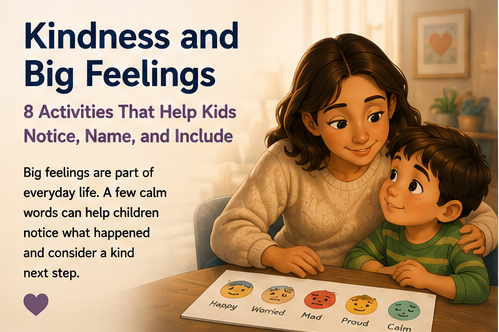
A child can be cheerful at breakfast and upset when their toast is cut differently. They may feel excited about school, worried about joining a game, frustrated with a sibling, or disappointed when plans change.
These moments do not always need a lesson. Often, a few calm words can help children notice what happened and consider a kind next step. Pick one activity that fits the day, keep it brief, and let your child respond in their own way.
1. Feelings Face Match
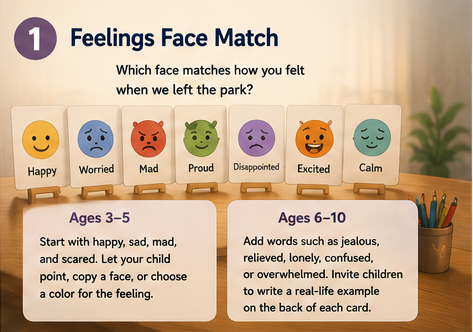
Draw simple faces for feelings such as happy, worried, mad, proud, disappointed, excited, and calm. Ask: "Which face matches how you felt when we left the park?" or "Can someone feel excited and nervous at the same time?"
Ages 3-5: Start with happy, sad, mad, and scared. Let your child point, copy a face, or choose a color for the feeling.
Ages 6-10: Add words such as jealous, relieved, lonely, confused, or overwhelmed. Invite children to write a real-life example on the back of each card.
2. The "Notice, Name, Next" Pause
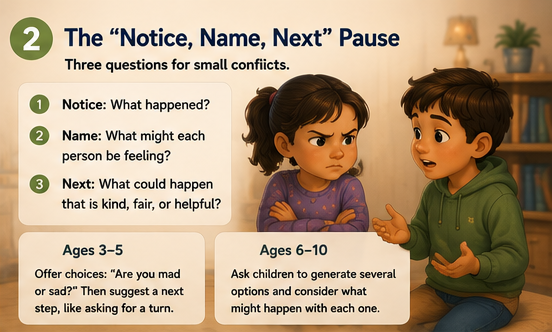
During a small conflict, pause for three questions:
- Notice: What happened?
- Name: What might each person be feeling?
- Next: What could happen that is kind, fair, or helpful?
For example: "Your sibling took the blue cup. You look angry. What could help next?"
Ages 3-5: Offer choices: "Are you mad or sad?" Then suggest a next step, such as asking for a turn or choosing another cup.
Ages 6-10: Ask children to generate several options and consider what might happen with each one.
3. Kindness Spotting Walk
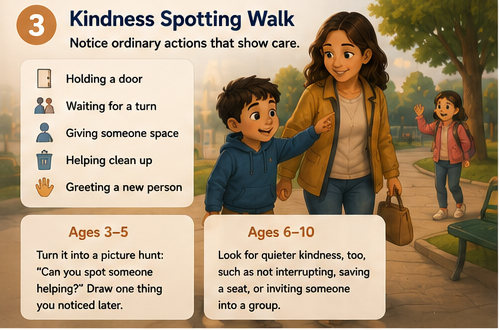
Take a short walk at home, in the neighborhood, at pickup, or on the playground. Notice ordinary actions that show care: holding a door, waiting for a turn, giving someone space, helping clean up, or greeting a new person.
The goal is not to judge others. It is to notice actions that can help people feel included and respected.
Ages 3-5: Turn it into a picture hunt: "Can you spot someone helping?" Draw one thing you noticed later.
Ages 6-10: Look for quieter kindness, too, such as not interrupting, saving a seat, or inviting someone into a group.
4. Make Room in the Game
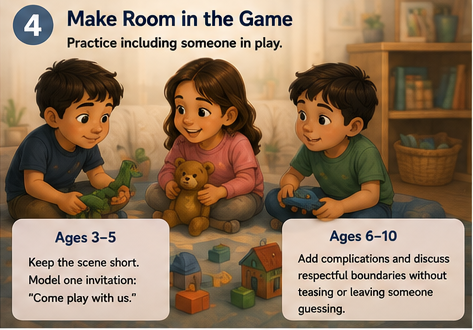
Use toys, stuffed animals, or paper characters to act out a situation where someone wants to join a game. Practice responses such as: "You can play with us," "We can add a role," or "We need to finish this round first."
This can also help children talk about the difference between needing space and excluding someone unkindly.
Ages 3-5: Keep the scene short. Model one invitation: "Come play with us."
Ages 6-10: Add complications: limited players, a new child in the group, or someone who says no. Discuss respectful boundaries without teasing or leaving someone guessing.
5. The Kindness Repair Kit
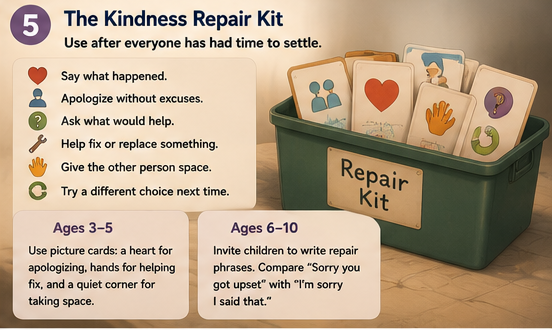
Make a small repair kit with paper cards or household items. Include ideas for after a hurtful moment:
- Say what happened.
- Apologize without excuses.
- Ask what would help.
- Help fix or replace something.
- Give the other person space.
- Try a different choice next time.
Use it after everyone has had time to settle.
Ages 3-5: Use picture cards: a heart for apologizing, hands for helping fix, and a quiet corner for taking space.
Ages 6-10: Invite children to write repair phrases. Compare "Sorry you got upset" with "I'm sorry I said that."
6. "What Would Help?" Drawing
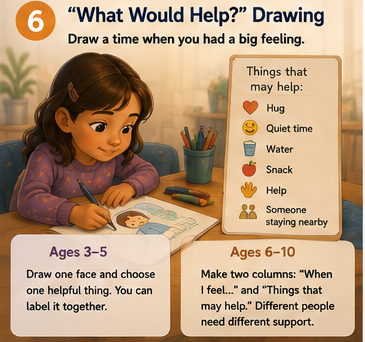
Invite your child to draw a time when they had a big feeling. They do not have to share it. Ask, "What might help the person in this picture?"
Answers may include a hug, quiet time, water, a snack, help solving a problem, or someone staying nearby.
Ages 3-5: Draw one face and choose one helpful thing. You can label it together.
Ages 6-10: Make two columns: "When I feel…" and "Things that may help." Remind children that different people may need different support.
7. Everyday Role-Reversal Questions
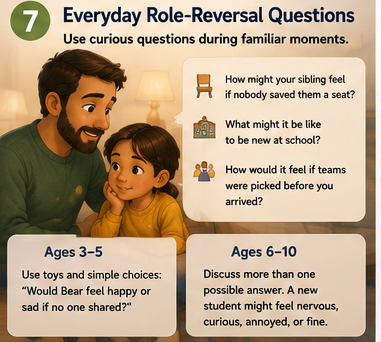
Use short, curious questions during familiar moments:
- "How might your sibling feel if nobody saved them a seat?"
- "What might it be like to be new at school?"
- "How would it feel if teams were picked before you arrived?"
Keep the questions curious rather than accusatory.
Ages 3-5: Use toys and simple choices: "Would Bear feel happy or sad if no one shared?"
Ages 6-10: Discuss more than one possible answer. A new student might feel nervous, curious, annoyed, or perfectly fine.
8. Create a Personalized Kindness Story With Istorya
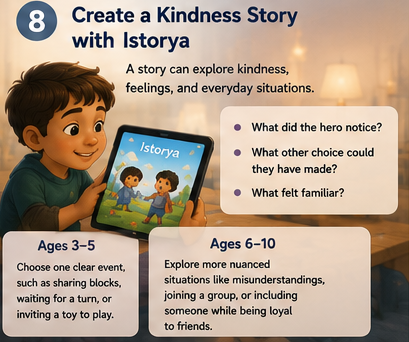
Istorya is in beta and creates illustrated personalized stories with the child as the hero. A story can explore values and everyday situations, such as including someone in a game, welcoming a new sibling, handling a school worry, or repairing a disagreement.
One possible theme is a child noticing someone sitting alone at recess and deciding how to include them in a game.
A digital Istorya story belongs before your household device-off point, then the conversation can continue away from the device. Ask: "What did the hero notice?" "What other choice could they have made?" or "What felt familiar?"
Ages 3-5: Choose one clear event, such as sharing blocks, waiting for a turn, or inviting a toy into pretend play.
Ages 6-10: Explore more nuanced situations, including misunderstandings, joining a group, a new classroom, or including someone while staying loyal to friends.
Keep conversations practical
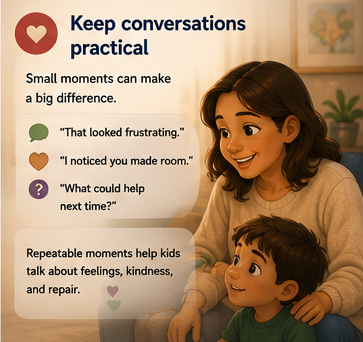
Children do not need a long discussion after every hard moment. Sometimes "That looked frustrating," "I noticed you made room," or "What could help next time?" is enough.
Adults can model this language, too: "I'm disappointed our plan changed, so I'm taking a minute to think." Small, repeatable moments can give families useful ways to talk about feelings, kindness, and repair.
Sources and further reading
- American Academy of Pediatrics: https://www.healthychildren.org/English/healthy-living/emotional-wellness/Building-Resilience/Pages/recommended-reading-books-to-teach-kids-about-feelings-and-resilience.aspx
- PBS Parents: https://www.pbs.org/parents/thrive/managing-back-to-school-feelings-with-arthur
- Child Mind Institute: https://childmind.org/article/starting-elementary-school/
- Cleveland Clinic: https://health.clevelandclinic.org/how-to-prepare-kids-for-school
- Child Mind Institute: https://childmind.org/article/preparing-child-new-sibling/